Ask five different Seattle plumbers what a whole-house repipe costs and you’ll get five different numbers, because the honest answer is “it depends on your house.” That’s not a dodge. A one-bath bungalow in Fremont and a three-story foursquare in Queen Anne are not the same job, and neither is priced off a single figure over the phone. Here’s what actually moves the number, so you can read a quote and know whether it makes sense for your home.
- Biggest driverFixture count and how many stories the water has to reach
- Biggest wildcardWall access: lath-and-plaster and finished basements cost more to open
- Material choiceCopper and PEX price differently, and most repipes use both
- PermitA whole-home repipe in Seattle requires a plumbing permit and inspection
Why the number online never quite matches your house
If you’ve spent an evening searching “whole house repipe cost Seattle,” you already know the feeling: a wall of numbers, no two alike, and no way to tell which one applies to you. In plumbing forums, homeowners describe exactly that confusion: asking “is this reasonable,” wanting a “sanity check” before they sign, one calling a big repipe number “a life-changing amount of money” to commit to without understanding why. That reaction is normal. A repipe is one of the largest checks a homeowner writes, and a vague number from a stranger on a tablet doesn’t earn that kind of trust.
The forum threads also show what separates a fair quote from a scary one: whether it spells out what’s included. Homeowners who felt good about theirs asked pointed questions first: permits, drywall patching, new shutoff valves, the pipe spec in writing (Type L copper versus something cheaper), warranty terms. Homeowners who felt burned describe the opposite: a number that grew after the crew arrived, or a “sales pitch on a tablet.” The fix isn’t the lowest number. It’s a quote detailed enough to hold up.
What homeowners in online forums report
In plumbing and homeownership forums, full-house supply repipes turn up anywhere from around $6,000 for a smaller single-story home with easy access, to $20,000 or more for a multi-story house that also needs main-line work, slab access, or extensive drywall repair. These are homeowner-reported figures from other markets and projects, not a Nic’s Plumbing price, and your house may land above or below that range depending on the factors below. The only number that matters for your home is the written one we give you after we’ve actually looked.
The five things that actually move the price
Once you take out the sales pitch, a repipe quote is really pricing five variables. Understanding them is the fastest way to sanity-check any number you’re handed.
Size and stories
More square footage and more floors means longer pipe runs. A three-story Queen Anne foursquare has more distance for water to travel than a single-story Fremont cottage.
Fixture count
Every sink, tub, shower, toilet and hose bib is a stub-out. A one-bath house has far fewer connections than a house with two full baths and a laundry room.
Wall and floor access
Open basement joists are easy to run pipe through. Lath-and-plaster walls and original fir floors are not, and every opening we make and patch adds time.
Material: copper or PEX
Copper generally costs more in materials and labor; PEX is usually the lower-cost route where it can hide inside existing chases. Most repipes use both.
What else the job uncovers
Seized shutoffs, a galvanized main from the street, mixed-metal joints from an old remodel: these surface once we’re inside the wall, which is why we diagnose first and price what we find.
That is the point homeowners keep circling back to in online forums: the difference between a number quoted sight-unseen and a number written after someone actually traced your pipe. I do the second one.
How we turn those factors into a number you can trust
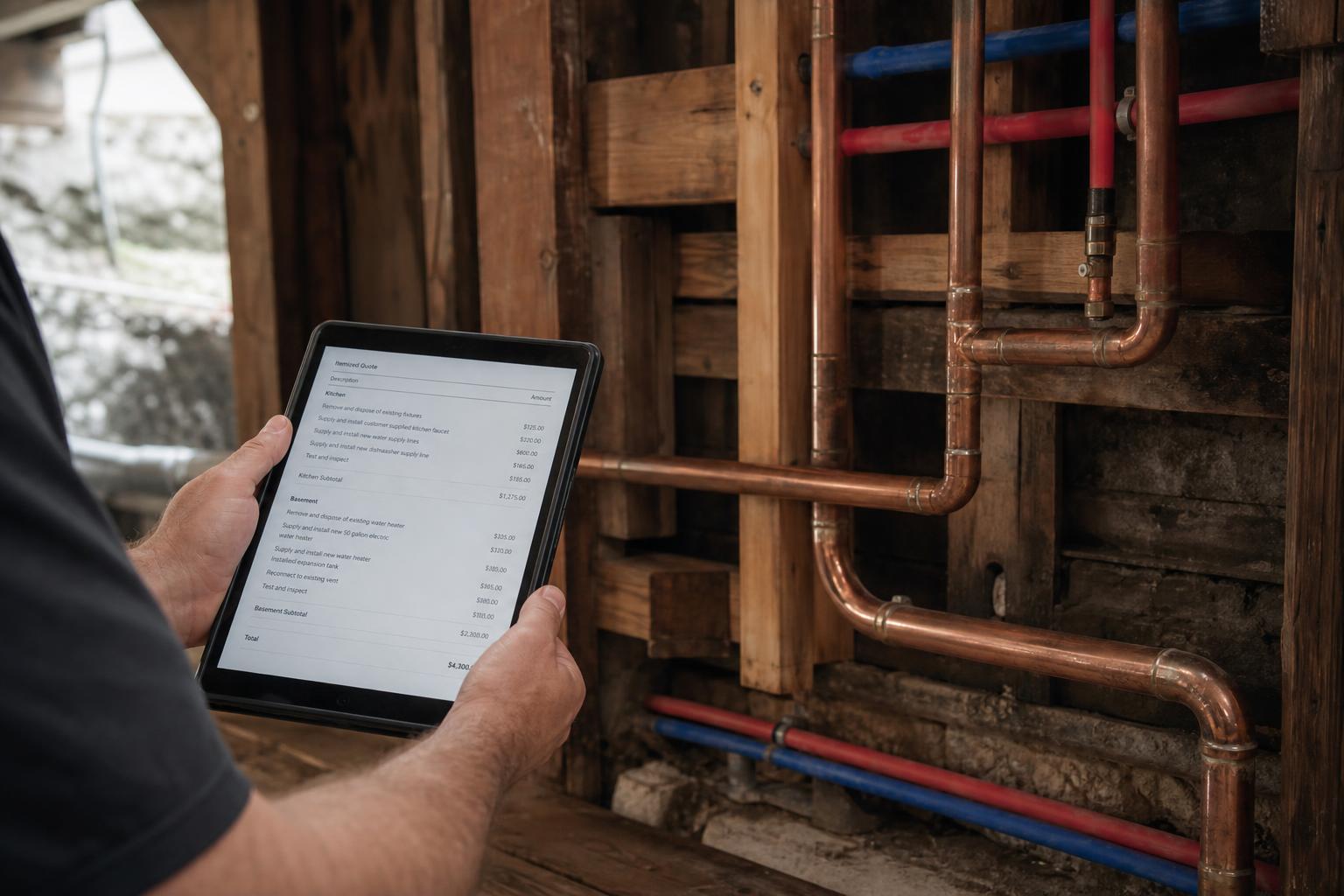
We don’t price a repipe over the phone. After we’ve looked at your house, you get three written options, each priced for your home and spelling out exactly what’s included.
Targeted mitigation
Replace the worst-corroded runs and restore pressure where it hurts most, without opening every wall in the house.
Partial repipe
Replace the galvanized on the main trunk lines and busiest fixtures, leaving sound newer sections alone.
Whole-house repipe
Every galvanized supply line out, a new copper or PEX system in, labeled at a new manifold. The do-it-once answer.
Each tier is a full written quote: pipe material, permit, what’s patched versus left open, and the schedule. You read it, ask questions, and approve the one you want before anything is cut. That approved figure is the figure on the invoice. See how the process works on our free written quote page, or go deeper in whole-house repipe: cost factors and process.
What the written quote should show you
| You should see it in writing | Why it matters |
|---|---|
| Pipe material and spec (e.g. Type L copper, or which PEX) | Cheaper spec pipe can look like a lower price for the same-sounding job |
| Whether the permit is included | A whole-home repipe in Seattle requires a plumbing permit and inspection |
| Drywall or plaster patching, or none | Some quotes stop at “pipe replaced,” leaving finish work as a surprise |
| New shutoff valves and manifold | Old seized shutoffs are often part of the real problem, not just the pipe |
| Warranty terms | Get it in writing rather than a verbal promise |
What the photo documentation shows on a repipe
Each galvanized run photographed in place, along with the exact wall or floor openings the job requires, so the quote maps to what we actually found.
The new copper or PEX installed, the pressure test result, and the labeled shutoffs, so you can see the number you approved is the work you got.
Want a real number for your house, not a guess?
I’ll look at your pipe, explain what I found in plain terms, and send options priced for your home. No sales pitch, no pressure.
Related reading
Old-home pipe mitigation & whole-house repiping
The full service overview, including the tier explainer and our repipe process.
Repipe cost factors & process, step by step
A deeper walk-through of how a repipe actually goes, from diagnosis to final photo.
Signs your old house needs repiping
How to tell a repair from a system on its way out.
Why are my two repipe quotes so different?
Seven questions that make any two quotes describe the same job, so the numbers can be compared.
Questions homeowners ask about repipe cost
Why won’t anyone give me a number over the phone?
Because the real number depends on things a call can’t see: fixture count, wall construction, whether the main is also galvanized. A quote given sight-unseen is either padded for the unknowns or too low to survive them. We look first, then write the number.
Is copper or PEX cheaper for a whole-house repipe?
PEX is usually the lower-cost route, especially where it can be fished through existing chases without opening walls. Copper costs more in material and labor but suits exposed runs. Most Seattle repipes use both, and we’ll tell you which makes sense where.
Does an older house always cost more to repipe?
Usually, but not because the pipe is different. Lath-and-plaster walls, finished basements and original fir floors take more time and care to open and protect than modern drywall and open framing. Construction moves the price more than age alone.
Do I need a permit for a whole-house repipe in Seattle?
Yes. Replacing water supply piping generally requires a plumbing permit and inspection in Seattle. We handle the permit and schedule the inspection, and it’s part of your written quote rather than a line item you have to chase down.
What should I ask before I approve a repipe quote?
Ask what pipe spec is used, whether permit and patching are included, what happens to the old shutoffs, and get the warranty in writing. A quote that answers all of that without hesitation is one you can trust. Ours does, by default.