
Water where it shouldn’t be does not wait for a convenient hour. A supply line lets go under the kitchen sink, a shutoff valve seizes mid-turn, a water heater starts weeping from the tank: in an older Seattle house these moments move fast, because the fittings are old and the access is tight. Nic’s Plumbing handles leak and fixture emergencies with the same standard as every job — a clear diagnosis, options you approve first, and a workspace left as clean as we found it.
- Do this firstFind and turn your main water shutoff before anything else
- Most common callsBurst or leaking supply lines, seized shutoffs, running toilets, water heater leaks
- How we quoteGood / Better / Best digital pricing, approved before any work
- Honest noteWe are not a 24/7 dispatch line yet — call and we get back to you fast, often same day
The moment you find the leak
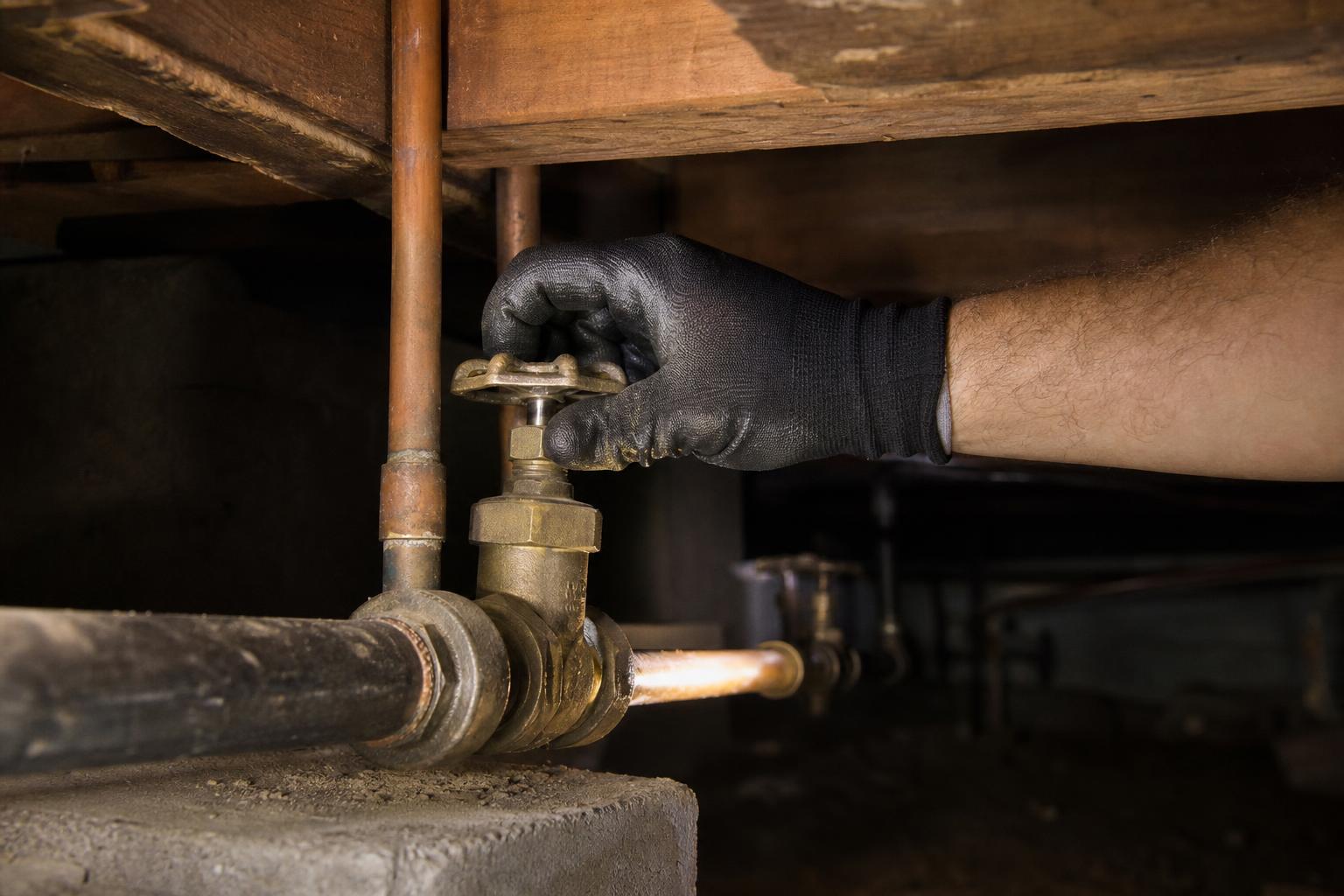
Every minute a supply line is open is water in the wrong place, so the first job is stopping the flow, not finding the source. In a house built before the 1960s, the main shutoff is often a stiff old gate valve rather than a modern lever. Look for it in the basement or crawlspace near where the water line enters, in a utility closet, or near the water heater — clockwise closes it, and an old gate valve may need steady pressure rather than a sharp twist. If the fixture has its own shutoff under the sink or behind the toilet, closing that first can buy time without cutting water to the whole house.
Find the shutoff
Main valve near the service entry, or the fixture’s own valve under the sink or behind the toilet. Turn clockwise to close.
Kill the power if water is near it
If the leak is near an outlet, light fixture, or the water heater’s electrical connection, shut off that circuit at the panel.
Call us
(206) 571-6044. Tell us what you’re seeing and where. We’ll walk you through anything urgent while we get to you.
Protect what you can
Towels, a bucket, or moving anything valuable out of the way while you wait is enough. Leave the diagnosis and the fix to us.
Old-house note: seized shutoffs
A shutoff that has never been closed since the house was built can round off, snap, or refuse to move. If yours won’t turn, don’t force it. Close the next valve upstream instead, even if that means the whole house, and call us. We replace seized valves with modern ball valves so the next shutoff is a quarter turn, not a fight.
What we fix most often
Old Seattle homes have decades of fixtures, fittings, and past repairs layered together, so leaks and failures show up in a handful of familiar ways. Here’s what we’re usually called out for.
- Burst or pinhole-leaking supply lines, copper or galvanized
- Shutoff valves that have seized or snapped off
- Running or silently leaking toilets
- Water heaters leaking from the tank or a fitting
- Leaking faucets, angle stops, and sink supply lines
How far the fix goes
Not every leak needs the same answer. Sometimes a single fitting is the whole problem; sometimes it’s a warning sign for the fixture around it. We look, explain what we found, and lay out real options.
Stop the leak
Isolate and repair the failed fitting, joint, or seal so the emergency is over today.
- Diagnose and stop the active leak
- Repair the failed joint, valve, or connection
Repair and replace the weak point
Fix the leak and swap the failed part for a modern equivalent.
- Everything in Good
- Replace seized or failing shutoffs with new ball valves
Fix it and stop the pattern
Address the failure and the nearby plumbing that’s likely next.
- Everything in Better
- Assessment of nearby galvanized or aging fixtures for future risk
You see each option in writing before we start. If your plumbing turns out to be older galvanized lines with more than one weak point, we’ll tell you honestly and point you toward our old-home repiping work instead of sending you back out for the next leak.
What the photo documentation shows on a repair call
The failed fitting or valve in place, the water damage or corrosion around it, and the shutoff we used to stop the leak.
The repaired or replaced part, the pressure test result, and the workspace sanitized with any flooring protected the entire visit.
Common emergency calls and what’s usually behind them
| What you’re seeing | What’s usually happening |
|---|---|
| Water spraying or pooling near a supply line | A corroded joint, a pinhole in copper, or a split galvanized line |
| Valve won’t turn, or turns and nothing happens | A seized or failed shutoff that needs replacing |
| Toilet runs constantly or refills on its own | A worn flapper or fill valve — usually a fast, low-cost fix |
| Puddle or rust at the base of the water heater | A failing tank, a loose fitting, or the T&P valve doing its job |
Leak, seized valve, or a fixture that just failed?
Shut off what you can, then call us. We’ll explain what we find and send priced options before we start.
Related services
All plumbing repair & service calls
Standard leaks, clogs, and fixture repairs across every service neighborhood.
Old-home pipe mitigation & repiping
When one leak points to galvanized supply lines nearing the end of their life.
How the Nic’s Plumbing process works
Diagnosis, priced options, protected floors, and photo proof on every visit.
Questions homeowners ask about emergency repairs
Are you a 24/7 emergency plumber?
Honestly, no — we’re a new company and don’t run a round-the-clock dispatch team yet. Call (206) 571-6044 and we’ll get back to you fast, often same day. If water is actively leaking, shut off the main or the fixture valve first; that stops the damage while you wait to hear from us.
Where is the main water shutoff in an old Seattle house?
Most often the basement or crawlspace near where the water line enters, or a utility closet close to the water heater. Older homes frequently have a gate valve rather than a modern lever, so it may take a full turn or two and steady pressure rather than a quick twist.
The shutoff valve won’t turn. What do I do?
Don’t force it — a seized old valve can snap off and turn a small leak into a much bigger one. Close the next shutoff upstream instead, even if that’s the main for the whole house, and call us. We replace failed shutoffs with modern ball valves as part of the repair.
My toilet won’t stop running — is that an emergency?
It’s rarely a flood risk, but it can run up your water bill fast and is usually a quick, low-cost fix — typically a worn flapper or fill valve. It’s a good candidate for a standard service call rather than something you need to treat as urgent.
My water heater is leaking — should I shut off the gas or power too?
Shutting off the cold water supply to the tank is the priority. If the leak is near the gas control valve or an electrical connection, shut off that circuit or the gas supply too until we can look at it. We’ll tell you whether it’s a fitting we can repair or a tank that needs replacing.
Will you patch the wall or floor after an emergency repair?
If we need to open plaster, drywall, or flooring to reach the leak, we’ll explain that first and keep the opening small. Patching can be part of your quote, or we can leave it clean and square for your own finisher — your call.