The thing that makes a Magnolia repipe different isn’t the house, it’s the distance. Parcels here are larger than a standard city block, so the trunk line from the meter has more length to scale up inside, and pricing off a typical-lot assumption gets Magnolia wrong in both directions. This page covers scoping a repipe on the peninsula. For drainage, sewer and everyday service, see plumbing service in Magnolia.
- Older stockGalvanized steel in Magnolia’s 1920s–1940s bungalows and Tudors near the Village
- Newer stockEarly copper in the 1950s ramblers toward Discovery Park, often now near end of life
- Lot factorMagnolia’s larger lots mean longer supply runs than a typical flat Seattle block
- How it’s quotedGood, Better and Best pricing in writing, approved before a wall gets opened
Old-house note: a longer run changes the math
On a standard Seattle lot, the trunk line from meter to house might run 20–30 feet. On larger Magnolia parcels, especially off Viewmont Way W and Perkins Lane W, that run can be double. A longer galvanized trunk gives corrosion more surface to build up on — one reason a Magnolia quote can include more trunk-line work than the same job on a tighter city lot. I measure the actual run on your property rather than pricing off a typical-lot assumption.
What a Magnolia repipe usually involves
Two pipe materials fail two ways, and the scope follows the failure mode. Galvanized closes from the inside out, so the symptom is system-wide: rust in the first glass, a shower that fades when the dishwasher runs, pressure that has been dropping for a decade. Early 1950s copper doesn’t close up — it perforates, usually as one pinhole in an exposed basement run with the rest of the system sound. That difference is why one house points toward a full repipe and the next honestly doesn’t.
If your house is a 1950s rambler, “repipe” is not what you expect to hear, and the fair first question is whether it’s actually necessary. I show the camera footage and the pressure numbers first, so you’re deciding from what’s there. See repipe now, or wait.
Bungalow access vs. rambler access
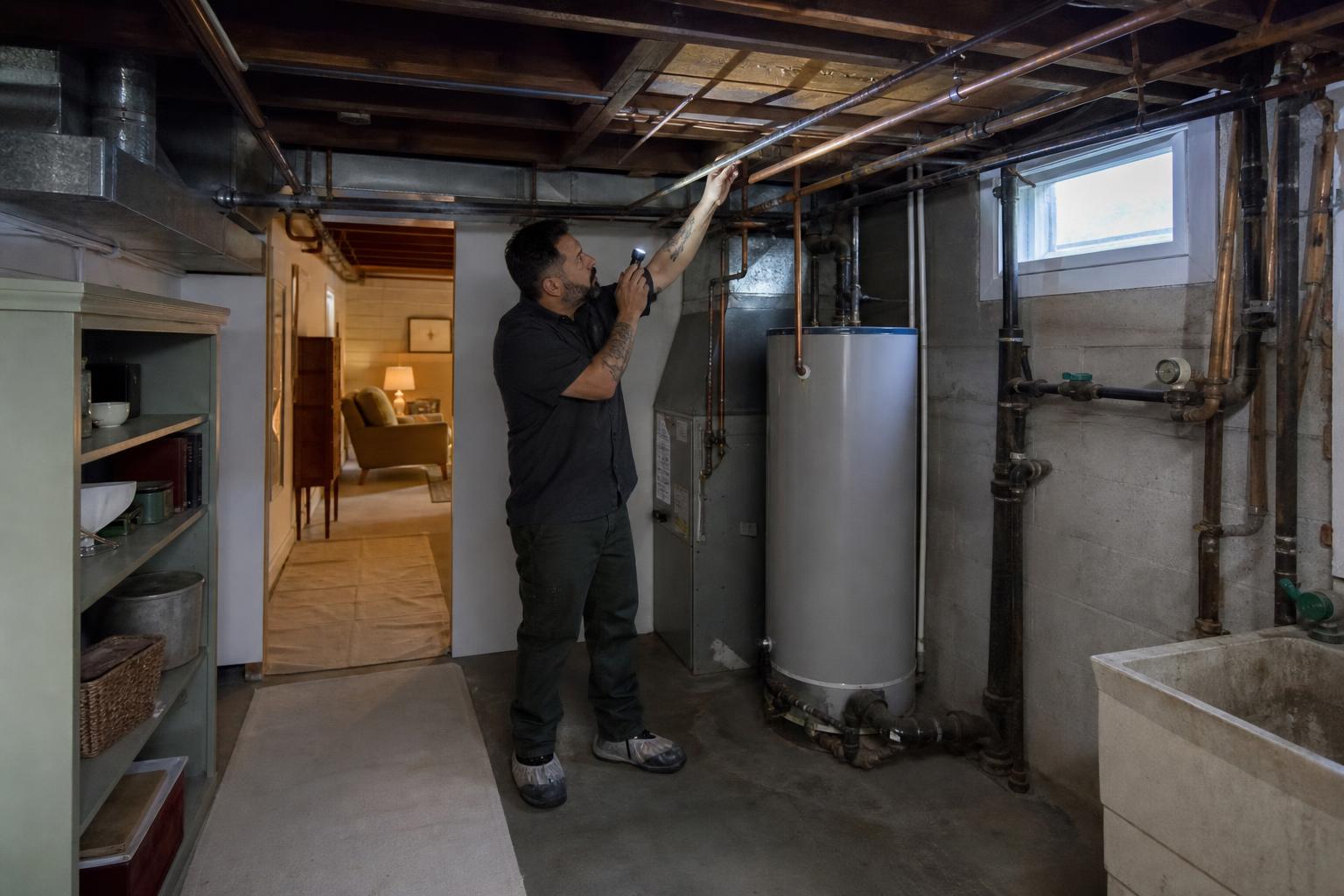
In a Village-era bungalow the trunk line is usually buried in a low crawlspace or boxed behind plaster and fir trim, so the plan uses a handful of precise openings. In a Discovery Park-area rambler the daylight basement is the advantage: the trunk is already reachable through an unfinished utility corner, meaning fewer openings upstairs. Either way, canvas runners go down first, and every opening is the smallest one that lets the work be done properly.
| Near Magnolia Village | Toward Discovery Park | |
|---|---|---|
| Original pipe found | Galvanized steel, 1920s–1940s | Early copper, 1950s |
| Trunk line length | Moderate, older tighter lots | Often longer, larger parcels |
| Main access point | Crawlspace or plaster wall | Daylight basement utility area |
| Typical failure | Whole-system pressure loss | A single pinhole leak |
Good, Better, Best for a Magnolia repipe
Targeted run replacement
Replace the specific failing section, often the longest stretch of trunk line, and restore pressure to the fixtures it feeds.
- Camera and pressure trace, meter to fixture
- Replace the worst run with copper or PEX
- Honest read on what’s likely next
Partial repipe
Replace the trunk line and the branches to the busiest fixtures, leaving sound newer sections in place.
- Everything in Good
- Trunk line sized for your lot’s actual run
- Branches to kitchen and main baths replaced
Whole-house repipe
Every galvanized or aging copper line out, a new system in, labeled at a manifold.
- Everything in Better
- Full trunk and branch replacement
- Permits handled, photos of every run
Each tier comes back as a written quote priced for your actual house. See repipe cost and process, or why two quotes differ.
The galvanized or aging copper run in place, the scale or pinholes at the joints, and the exact opening planned.
New copper or PEX installed, the pressure test result, and the opening left clean for your finisher.
Rusty water or fading pressure in your Magnolia home?
I’ll trace what your house has, meter to fixture, and send Good, Better and Best options to approve before work begins.
More on repiping and Magnolia service
Galvanized pipe replacement
The original supply pipe behind most Village-area walls.
Repiping in Queen Anne
Three stories of rise instead of a long horizontal run.
Plumbing service in Magnolia
Storm drainage, sewer and water heaters on the peninsula.
Questions Magnolia homeowners ask about repiping
My house is a 1950s rambler with copper, not a historic bungalow. Do I really need a repipe?
Not automatically. Copper lasts longer than galvanized, and plenty of Magnolia ramblers have decades left in their original lines. A single pinhole in an exposed basement run is usually a repair, not a repipe. If a targeted fix is the honest answer, that’s what you’ll hear.
Will you have to cut into my finished daylight basement?
Usually less than people expect. The unfinished utility area of a daylight basement often gives access to the trunk line without touching the finished rec room. Where an opening is unavoidable it gets planned in advance and photographed before and after.
Does a bigger Magnolia lot make a repipe take longer?
It can add time to the trunk-line portion, since there’s more pipe between meter and house on many Magnolia parcels. Your quote accounts for the run measured on your property, not a generic estimate.
Do I need a permit to repipe a Magnolia house?
Yes. Replacing water supply piping in Seattle generally requires a plumbing permit and inspection, and a trunk run reaching the street right-of-way needs a separate SDOT permit. Both are handled as part of the job.