
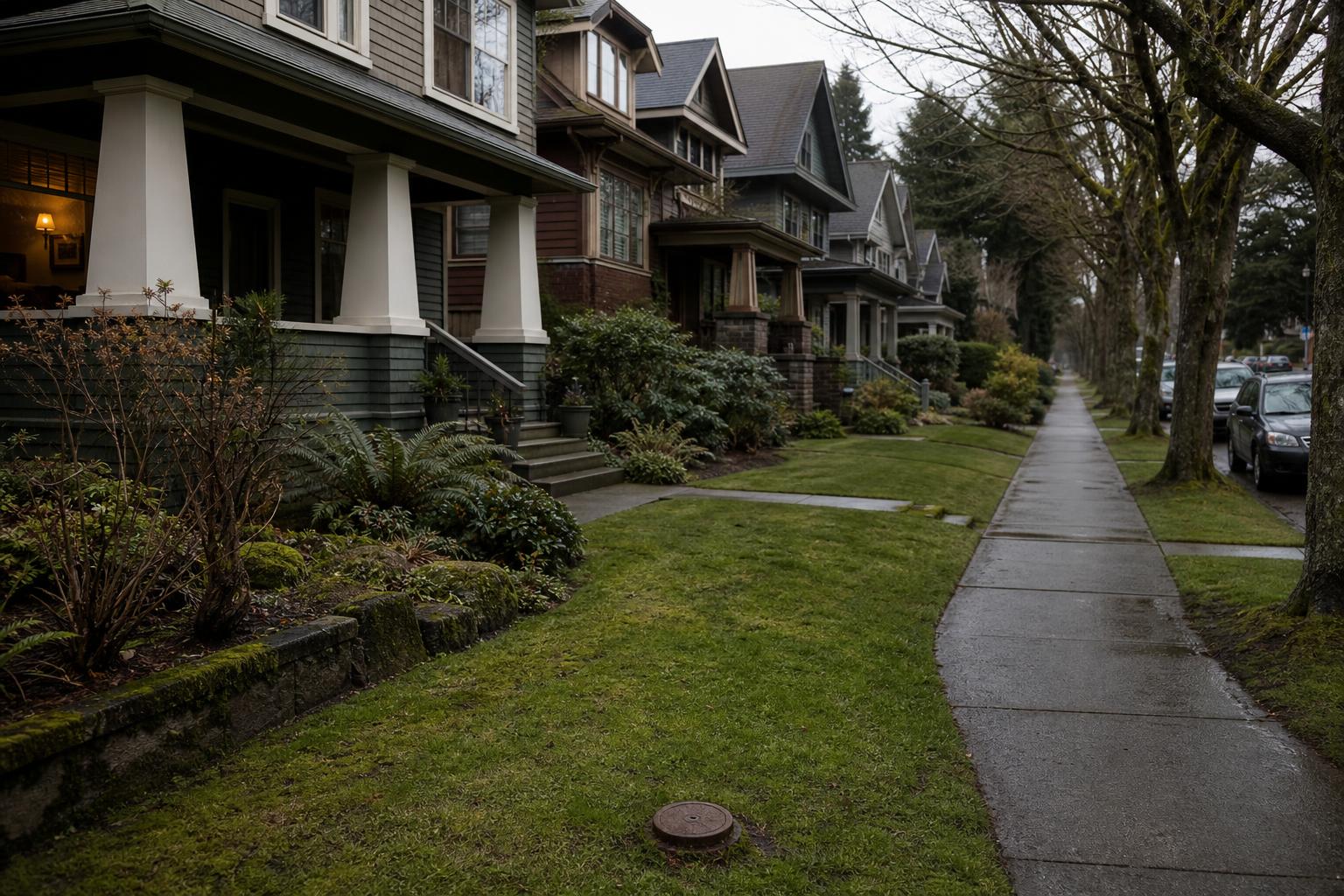
The pipe that carries wastewater from your Seattle house out to the street is called a side sewer, and here is the part most homeowners never hear until something goes wrong: you own it. Not just the section under your yard, but the whole run, all the way to the city’s main line under the street. That single fact drives every permit question, every “who do I call” question, and every “am I about to get played” question that comes up when a side sewer needs work. This guide lays out what Seattle actually requires, in plain English, with nothing invented.
- OwnershipYou own the side sewer from your house to the city main, per King County
- Repair/replace permitAn SPU Side Sewer Permit, issued by Seattle Public Utilities since Oct 1, 2025
- Exempt workRoot cutting and unclogging do not require a permit
- Working in the street?An SDOT Street Use permit is required for right-of-way excavation or staging
Wait, I own the pipe under the street too?
Most people assume the city owns everything past the property line. In Seattle, it does not. King County is direct about it: every house has one sewer pipe connecting it to the larger sewer system, and that pipe, the side sewer, is the owner’s responsibility from the foundation to the public main, which is often out under the street, not the edge of your lot. If a scope video shows roots, an offset joint, or a belly under the sidewalk, it is still your pipe and your call.
We hear the same reaction a lot: a homeowner posts a camera inspection online and asks whether they are “being played” once a stranger with a scope says a pipe under the public street is their problem. Fair question. The honest answer is yes, it is yours, but that does not mean accepting the first number someone hands you on a tablet. It means knowing what actually triggers a permit before you approve anything.
If you live in Ballard, Fremont, Wallingford, or north Queen Anne
These neighborhoods sit on Seattle’s combined sewer system, meaning sewage and stormwater share the same pipe on their way to the West Point Treatment Plant. Heavy rain fills that shared pipe fast, which is part of why side sewer condition and downspout connections get extra scrutiny here. Worth checking both your side sewer card and how your downspouts are routed.
What actually requires a permit
Seattle’s rule is more specific than “call the city before you touch anything.” A Side Sewer Permit is required whenever a pipe or an external fixture, such as a cleanout or a yard drain, needs repair or replacement, on private property or in the right-of-way. As of October 1, 2025, that permit is issued by Seattle Public Utilities through the Seattle Services Portal, not the department that used to handle it. What does not require a permit: root removal and unclogging. If a plumber tells you clearing a clog needs a permit, that is not accurate under SPU’s own rule.
There is a second permit layer if the work reaches into the street. Any staging, excavation, or restoration in the right-of-way for side sewer work needs an SDOT Street Use permit, requested from inside the same SPU application, so you are not tracking down two separate offices. On exact fees, timelines, or whether your job needs both permits, the honest answer is to check with the city or ask us; we pull the right permits as part of the job rather than guess.
| Permit | Who issues it | When it applies |
|---|---|---|
| SPU Side Sewer Permit | Seattle Public Utilities (since Oct 1, 2025) | Any repair or replacement of a side sewer pipe or external fixture, private property or right-of-way; not required for root cutting or unclogging |
| SDOT Street Use (Side Sewer) permit | Seattle Department of Transportation | Excavation, staging, or restoration work that reaches into the public right-of-way |
How to check your side sewer before you call anyone
Look up your side sewer card
Seattle keeps a public record for most properties on the Side Sewer Card Viewer. Search your address to see if a card exists for your house.
Read what the card actually shows
A side sewer card typically sketches the pipe’s route, its material and size where recorded, and where downspouts tie in. It is a historical record, not a current condition report; an old card can still show a route that was later changed.
Check your downspout connections
Older cards often show downspouts routed into the side sewer itself. In combined-sewer neighborhoods, that connection matters for how much water your pipe handles in a storm.
Get a camera inspection if anything looks off
A card tells you what was built. A scope tells you what is happening now: roots, a belly, an offset joint, or scale. See our sewer camera inspection page for how that works.
Talk through the permit before the work starts
Once you know the scope of the fix, we tell you plainly whether it is exempt (root cutting, unclogging) or needs an SPU permit, an SDOT permit, or both, before you approve anything.
If your side sewer card is missing, unreadable, or decades out of date, a camera inspection is the fastest way to know what you are actually dealing with, and we walk you through the footage in plain language.
- You own the side sewer to the main, not just to your property line
- Root cutting and unclogging: no permit needed
- Repair or replacement: SPU Side Sewer Permit required
- Work reaching the street: SDOT Street Use permit required
- Side sewer cards are public records you can check yourself
Not sure what your side sewer situation actually is?
We will pull your side sewer card, scope the line if it makes sense, explain what we find in plain terms, and handle the permits that actually apply, no more, no less.
Related side sewer help
Side sewer repair & trenchless replacement
Our full page on diagnosing and fixing a side sewer, including how trenchless options work.
Sewer camera inspection
How we scope an older Seattle side sewer and what the footage actually tells you.
Trenchless vs. dig-and-replace
Choosing between a liner or burst-and-replace when your side sewer needs work.
Heavy-rain drainage & storm protection
Where downspouts, drainage, and a stressed side sewer intersect in Seattle’s wet season.
Questions homeowners ask about side sewers
Do I really own the sewer pipe under the street in front of my house?
Yes. King County is explicit that the side sewer connecting your house to the larger sewer system is the owner’s responsibility, all the way to the main, including the section under the parking strip or street. It is a surprising rule to learn for the first time, but it is standard across Seattle, not something specific to your address.
Do I need a permit just to clear a clog or cut roots out of my side sewer?
No. Seattle’s Side Sewer Permit rule specifically exempts root removal and unclogging. A permit is needed once a pipe or fixture like a cleanout or yard drain actually needs repair or replacement.
Who issues side sewer permits in Seattle now?
Seattle Public Utilities has issued Side Sewer Permits through the Seattle Services Portal since October 1, 2025. Older information pointing you to a different department is out of date. We keep this current on every job, so you never have to track down which office to call.
What is a side sewer card and how do I find mine?
It is a historical record the city keeps showing your side sewer’s route, material, and size where documented, plus where downspouts connect. Most properties can be looked up on the public Side Sewer Card Viewer at maps.seattle.gov. Treat it as a starting point, not current condition; a camera inspection is the only way to see what is actually happening today.
Do I need a separate permit if the repair reaches into the street?
Yes, in addition to the SPU Side Sewer Permit. An SDOT Street Use permit is required whenever staging, excavation, or restoration happens in the right-of-way for side sewer work. You request it from inside the same SPU application, and we handle that as part of the job when the scope requires it.