Nobody wants to hear that their side sewer needs to be replaced. The next question is almost always the confusing one: trenchless, or dig it up? Both fix a broken sewer line. They don’t cost the same, they don’t disrupt the yard the same, and one of them simply isn’t an option for every pipe. Here’s how to tell which one your house actually needs, in plain terms, before anyone hands you a number.
- Two trenchless methodsCIPP lining (resin liner cured inside the old pipe) and pipe bursting (new HDPE pipe pulled through, breaking the old one apart)
- What trenchless needsA pipe path still roughly the right shape and grade, with no full collapse
- What it can’t fixA true belly (sag) holding water, a collapsed section, or pipe too damaged to support a liner
- Permit either waySeattle’s SPU issues the side sewer permit for repair or replacement, on-property and in the right-of-way
The decision that stresses people out
The camera comes back with roots, an offset joint, or a cracked section of old clay, and suddenly you’re choosing between two unfamiliar words and two very different numbers. Homeowners describe this moment the same way in online forums: “so stressed about this decision,” “the trenchless quote is making your head spin.” A sewer line is buried, and most people are being asked to approve a five-figure decision from a video they’ve never had to read before.
We show you the footage first and point at exactly what’s wrong, in plain language, before we say “trenchless” or “dig.” Then we tell you honestly which one your pipe can actually have.
How trenchless sewer repair actually works
“Trenchless” covers two different repairs that solve different problems, and both start and end with a camera pass.
Camera diagnosis
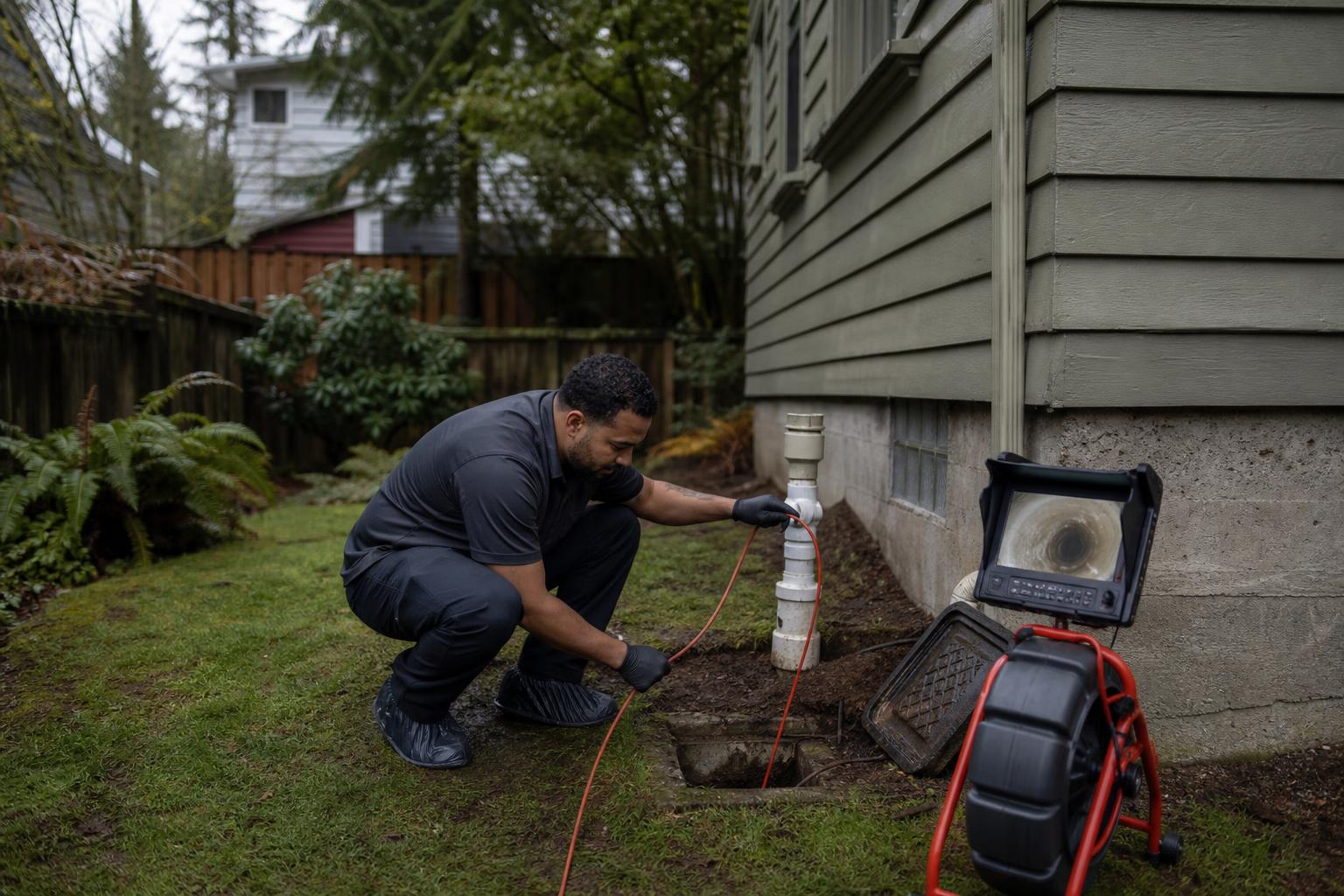
We scope the line and record it, so you’re looking at your actual pipe. Cracks, roots, offset joints, and any sag in the grade show up on the footage.
Clean the line
Roots and debris are hydro-jetted out so a liner or bursting head can pass through cleanly.
Liner or bursting head, from small access points
CIPP lining cures a resin liner inside the old pipe. Pipe bursting pulls a new HDPE pipe through, breaking the old one apart and sizing the line up. Access is usually a cleanout and one or two small pits, not a trench.
Cure or pull-through, then test
The liner cures, or the new pipe is connected, then we camera the line again to confirm a clean pass.
Permit inspection and photo record
Seattle requires an inspection before backfill. You get the before-and-after footage and the inspection record together.
When trenchless isn’t possible
Trenchless repairs a pipe that’s basically in the right place, just damaged or root-invaded. It doesn’t fix a belly: a low spot where the grade sagged and water pools instead of draining. It doesn’t fix a full collapse, where there’s no intact pipe left to line or burst through. A line that’s badly offset at multiple joints or crushed can be too compromised for either method. In those cases, we’ll say so, and show you why on the footage.
Dig-and-replace: when it’s the right call, not the fallback
Open-trench replacement means digging up the pipe’s path and setting new pipe at the correct grade from scratch. It’s more disruptive to the yard or driveway above it, and it takes longer to close back up. But it’s also the only method that can fix a belly, replace a fully collapsed run, or correct a line installed too shallow in the first place. When the footage shows a sag holding standing water, digging isn’t the expensive option, it’s the one that actually solves the problem.
Trenchless vs. dig-and-replace, side by side
| Consideration | Trenchless (lining or bursting) | Dig-and-replace |
|---|---|---|
| Yard, driveway, hardscape | One or two small access pits | An open trench along the pipe’s full path |
| Fixes a belly or sag | No, follows the existing grade | Yes, sets new pipe at correct grade |
| Fixes a full collapse | No, needs intact pipe to line or burst through | Yes |
| Timeline | Often a single day for the pipe work | Typically longer, plus restoration time |
| Restoration after the job | Minimal, just the access pits | Landscaping, concrete, or hardscape repair |
| Permit | Side sewer permit required | Side sewer permit required |
On cost, homeowners in online forums report a wide range for both methods, since length, depth, and access all move the number. Trenchless per-foot pricing often runs higher, but a dig usually adds restoration cost on top, so the two can land closer together than people expect. One homeowner posted a roughly $10,000 trenchless lateral, about 35 to 40 feet with two cleanouts and permit included, as a real data point. Yours depends on your pipe, which is why we camera the line and quote your specific job.
What the camera footage and photos show you
The full camera pass showing the break, root intrusion, offset joint, or belly, with the location marked so you can see exactly what’s wrong and where.
A second camera pass through the finished pipe, plus photos of the access points, the completed connections, and the inspection record.
Permit reality for a Seattle side sewer
Seattle calls this pipe a “side sewer,” and you own it from your house to the city main. A Side Sewer Permit is required any time a pipe or fixture like a cleanout is repaired or replaced, on private property and in the right-of-way alike, though root cutting and unclogging don’t need one. As of October 2025, Seattle Public Utilities issues these permits through its Services Portal. Digging or staging in the street or parking strip also needs an SDOT right-of-way permit, requested from that same application. We handle both as part of either method. For the exact fee on your address, ask us or check with SPU directly.
Curious what your property’s original side sewer route looks like? Our guide to Seattle side sewers covers ownership, permits, and how to read your side sewer card.
Not sure which one your pipe needs?
We’ll camera the line, show you what we found, and tell you honestly whether trenchless is on the table before we quote either option.
More on side sewer repair
Side Sewer Repair & Trenchless Replacement
The full service overview: camera-first diagnosis, both methods, permit handled.
Pipe lining vs. pipe bursting
Already know trenchless is possible? How to choose between the two methods.
Sewer camera inspection
What clay, cast iron, and root intrusion actually look like on video.
Questions homeowners ask about trenchless vs. dig-and-replace
What is trenchless sewer repair, exactly?
It’s a way to repair or replace a sewer line without digging up its full path. CIPP lining cures a resin liner inside the existing pipe; pipe bursting pulls a new pipe through while breaking the old one apart. Both work from one or two small access points instead of a trench.
Can tree roots be fixed without digging?
Usually, yes. Root intrusion at a joint or crack is a common reason a line qualifies for trenchless repair, since the pipe itself is still basically intact. We hydro-jet the roots clear first, then camera the line to confirm it’s a good candidate before recommending lining or bursting.
How long does trenchless sewer repair take?
The pipe work is often done in a single day once the crew is on site, since there’s no trench to dig or backfill. Add time for the camera diagnosis and the permit inspection. Dig-and-replace takes longer, both for the excavation and for restoring the yard or driveway afterward.
Do I need a permit to replace my side sewer in Seattle?
Yes. A Side Sewer Permit is required for any repair or replacement, whether it’s on your property or in the right-of-way, for either trenchless or dig-and-replace. Root cutting and clog removal don’t require one. Seattle Public Utilities has issued these permits since October 2025.
Does a home warranty cover sewer line repair?
It depends on your policy and its exclusions, so we can’t answer that for your plan. We can give you the camera footage, an itemized scope, and a written quote to hand directly to your warranty provider or insurer.